How to Teach Your Kids to Ski: A Parent's Guide to Getting Started
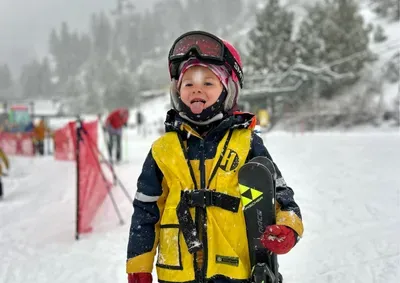
How to Teach Your Kids to Ski: A Parent's Guide to Getting Started
Teaching your kids to ski can be so much fun, but it also takes patience, a little planning, and plenty of snacks. Between getting boots on, navigating the snow, and convincing a toddler that skiing is actually fun, there can be a few challenges along the way.
The goal isn't to raise the next Olympic skier. It's to help your kids feel comfortable on the snow and build a love for skiing so you can enjoy the mountains together for years to come. Here are a few tips we've learned from teaching our own little skiers.
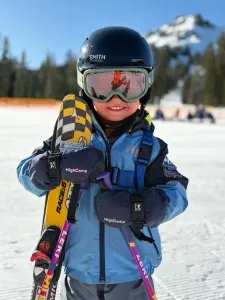
1. Set Yourself Up for Success Before You Leave the House
A little preparation goes a long way. Make sure your kids are dressed in warm layers, including a base layer, insulating mid-layer, waterproof jacket and pants, warm socks, gloves, and a helmet. Avoid cotton, which can get cold and damp.
A few other things that can make the morning easier:
Bathroom first: Make one last bathroom stop before all those layers and ski boots go on.
Food and naps: Try to stick to your normal meal and nap schedule. A tired or hungry kid is rarely excited to learn something new.
Pack snacks: Bring their favorites, plus a few gummies or M&Ms to celebrate small wins.
Prepare yourself, too: You'll spend plenty of time bending down and helping little skiers. Stretch your back and wear comfortable shoes with good traction.
2. Practice With Ski Boots Before Hitting the Snow
Ski boots can feel pretty strange at first. Let your child try them on a few times at home and walk around so they get used to the weight and feel.
Once they're comfortable, add the skis. Let them stomp around on the carpet or in a flat, safe area outside. Getting familiar with the equipment before heading onto the snow can make the first day much easier.
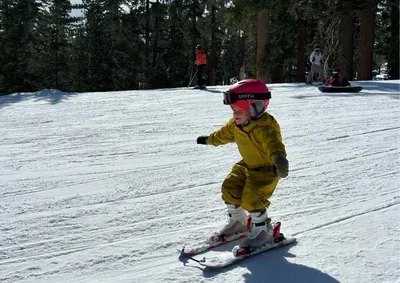
3. Find a Gentle Incline and Practice Gliding
Once they're comfortable in their boots and skis, find a wide, open area with a very gentle slope, away from other skiers and obstacles.
Have your child glide a short distance toward you. Keep it simple. The goal is just to get comfortable balancing and sliding on the snow. You don't even need to put your own skis on yet.
Parent tip: Bring a ski pole to gently pull your little skier back up the small incline. It can save you a lot of walking!
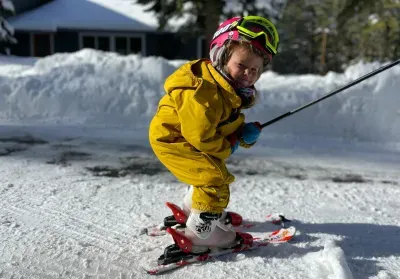
4. Graduate to the Magic Carpet (and Get an Edgie Wedgie!)
Once your child is comfortable gliding, it's time to try a beginner slope with a magic carpet. Think of it as a slow-moving conveyor belt that carries skiers up the hill, so there's no need to worry about a chairlift just yet. Most resorts have these in designated beginner areas. Heavenly has beginner learning areas at California Lodge and Boulder Lodge, and Palisades Tahoe and Kirkwood also have dedicated beginner terrain. Check with the resort ahead of time to see whether magic carpet access requires a lift ticket or separate fee.
Another helpful tool is an Edgie Wedgie, an inexpensive connector that attaches to the tips of your child's skis and helps keep them in a wedge, or pizza, shape. It makes learning to slow down and stop much easier. You can usually find one at a ski shop for around $12 to $15.
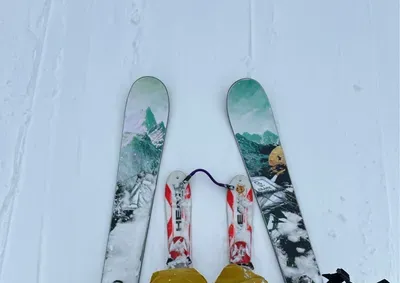
A few tips for getting started:
Leave your poles behind. Your child won't need them, and neither will you for this.
You can ride up alongside your child in your ski boots, standing on either side of their skis. If you prefer to wear skis, shorter ones can make it easier to maneuver in the beginner area.
At the top, you can ski a short distance ahead and have your child glide toward you, or let them ski between your legs while you help guide them.
Keep the runs short and celebrate each little success.
5. Teach Them to Make a Pizza (and Stop!)
Before worrying about turns, focus on helping your child control their speed and stop. The pizza, or wedge, is the foundation of beginner skiing. Have them bring their ski tips closer together while spreading their heels apart to create a wedge shape.
Parent tip: Sometimes changing how you explain a movement makes all the difference. Instead of just saying "point your toes together," try "spread your heels apart" or have them make a triangle shape with their hands. Let their hands show what their feet should do!
Practice making a pizza and stopping on short, gentle runs. A gummy at the bottom never hurts.
6. Start Practicing Turns
Once they're comfortable stopping, you can start introducing turns. Keep the instructions simple and show them what you mean. Putting a little more pressure on the outside ski helps guide the turn.
If you're in a beginner area with cones, use them to make a little course. Otherwise, you can create your own with visible markers like pinecones or small branches, where permitted. Turning it into a game makes practice feel less like a lesson.
7. Teach Them How to Get Up After a Fall
Falling is part of learning, so it's helpful to teach kids how to get back up early on.
Have them bring their skis side by side and turn them across the slope, rather than pointing downhill. They can then use their hands and legs to push themselves up, keeping their weight centered over their skis.
It may take a few tries, but learning to get up on their own is a big confidence booster.
8. Make the Chairlift Part of the Adventure
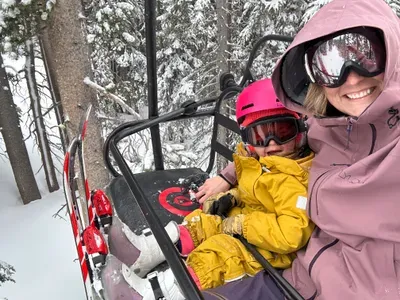
Before getting in line, take a few minutes to watch other skiers load and unload the chairlift. Let your child see what they'll be doing so it feels less intimidating when it's their turn. It's also a good idea to take a break beforehand. A tired kiddo may find the whole process overwhelming.
When you're ready, let the lift operator know you're riding with a young child. They're used to helping families and can slow the lift down for loading and unloading. Follow their instructions, help your child get seated, and remind them to sit back and stay seated for the ride. You can also ask the operator at the top for help getting off.
A few other tips:
Bring a snack: The ride up is a great time for a little treat and a break.
Consider a ski harness: One with a handle on the back can help you support your child and offer assistance if they fall.
Skip the poles for now: Most kids don't need ski poles until they're around 8 or 9 years old and comfortable skiing blue runs.
9. Keep It Fun, Take Breaks, and Celebrate the Little Wins
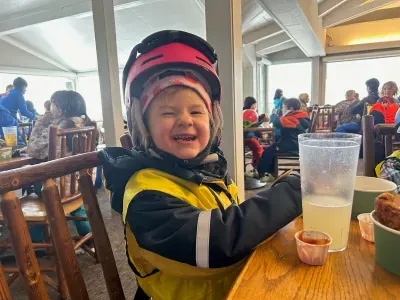
This might be the most important tip of all. Keep things positive, take breaks before your child gets too cold or tired, and don't push for one more run if they've had enough.
A few turns, a gummy break, and a little hot chocolate can go a long way. You can also make things more fun with a little music from a waterproof Bluetooth speaker, as long as it's permitted and doesn't distract other skiers.
A happy hour or two on the mountain is much better than an entire afternoon that ends in frustration. Let them build confidence at their own pace.
One Last Thing: Know When to Call in the Professionals
Teaching your own kids to ski can be incredibly rewarding, but ski instructors are great at building confidence and teaching proper technique. A half-day lesson can be a worthwhile investment, especially once your child is ready to move beyond the beginner area.
Take it one step at a time. That first pizza, first turn, and first chairlift ride are all big milestones. Enjoy them. Before you know it, you'll be chasing your little skier down the mountain!
If you're planning a family ski trip to Lake Tahoe, we'd love to welcome you to the mountains! With great beginner terrain, family-friendly ski areas, and plenty of ways to enjoy a day in the snow, Tahoe is a wonderful place to make those first ski memories. Come stay with us at Modern Mountain Vacations and make a little mountain time part of your family tradition.